All About David Sloan
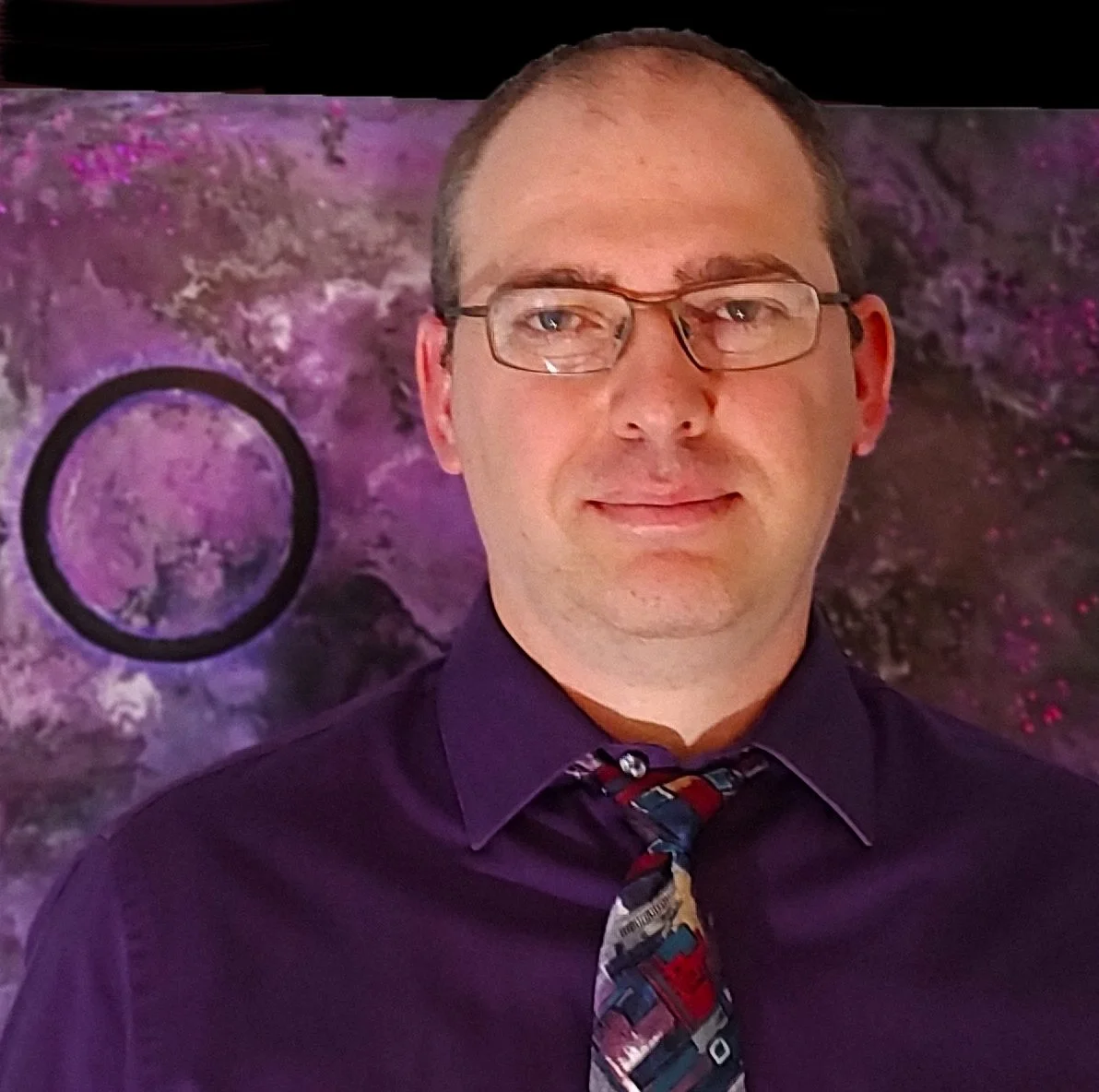
Hi!
I’m David Sloan, the author of the Edge of the Woods series and other novels. Thank you for visiting the site!
I’ve always loved writing stories. Can I share some times in my life that helped me become a novelist?
My parents are fun and creative people who first taught me to read and discover stories. I think the first story book I ever read on my own was Puss in Boots. I would stay up late at night with a book trying to read by the light of the streetlight outside my window, and they would have to tell me to go to bed.
The first time that I started writing a chapter book was in 4th grade, in Ms. Scranton’s class at Verplanck Elementary School in Manchester, CT. We were given time each day to write quietly, and she would come to each of us to talk about what we wrote. I loved dinosaurs and science, so I wrote chapters about a group of dinosaurs. In each chapter, I wrote about some natural disaster afflicting them (a volcano, an earthquake, etc.) I remember her coming to my desk and suggesting that I should try giving them a problem to solve to make the story more engaging. So I wrote about an oviraptor who was stealing their eggs, and I liked it! I think that was the first time that I realized how stories actually work: setting, problem, plot, resolution! How great! I’ve been making up stories ever since.
I loved to read. I remember going to the Mary Cheney Library in town or the school library and finding books by science fiction authors like Isaac Asimov or Arthur C. Clarke, as well as series like The Hardy Boys, Young Indiana Jones, or My Teacher is an Alien. I also loved Star Wars and Star Trek novels. When I went to the school book fair, I always looked for adventure books like Return to the Tomb of the Dead. The book that really shifted how I think about stories, though, was when I first read Jurassic Park in middle school. That story blew me away. Michael Crichton taught me that I could blend really cool, exciting stories with real, advanced concepts like chaos theory, genetics, statistical fallacies, and the risks of emerging biotechnologies. I read everything I could find by Michael Crichton and he became my favorite fiction author, and he led me to other more adult novelists like Tom Clancy, John Grisham, Douglas Preston and Lincoln Child.
By the time I was in high school, I was ready to try my hand at writing my own novel. I started in a spiral-bound notebook that I would take out with me on the bus. I used a brown paper bag to make a cover to keep it secure. The story was called Ambassador. It was about a boy named Andy Letchmey who was kidnapped and taken to a secret government facility where kids were being groomed to become a replacement government if the current one fell. When my family got our first home PC, a Windows 95 machine with a disk drive, I started typing it out. Unfortunately, I never finished the book, and the project died, but the experience was important to me.
I left writing for a long time. I went to college, served a mission for my church in Colombia, and then went to graduate school to get my Ph.D. in neuroscience at the University of Virginia. I still loved reading and thinking up short stories, but I focused on starting a career.
In 2006, I met the love of my life: an English teacher named Naomi. On our second date, we decorated bikes and rode around Washington DC on the 4th of July, and I told her then about the things I wanted to write. She encouraged me. In 2007, we were married. I got my diploma, we had my oldest daughter, and we moved to West Virginia so I could continue my career as a scientist.
Around this time, I got an idea for a short story about four people with perfect March Madness brackets sitting together in the stadium to watch the Final Four. I love basketball and the thrill of the NCAA tournament. When I wrote the story with the four characters, I realized that I could leverage the concept to write a novel that contained each of my four favorite kinds of stories: action thrillers, political dramas, science fiction, and technothrillers, and I could do it in the built-structure of progression of each round of the tournament. That was when I decided to pursue a goal of writing a whole novel from start to finish. And I did! I joined a writer’s group in Morgantown and got encouraging feedback, I wrote the whole Brackets. My wife edited it (which was a lot of work), I designed the cover, and published it! It felt great.
And now that I knew I could do it, I wasn’t going to stop. It was still just a hobby, but writing had now become a part of who I was.
We moved from Morgantown to Baltimore, Maryland in a house next to the woods. I started working in health care and we established a beautiful life for our family. I began work on a long, ambitious, complicated novel called Cameraman, which was also based on a short story. It was hard to write and hold down a hard job and be a Dad and do all the things adults have to do, but over many years of nights and Saturdays and finding time here and there, I finished it and published it. If Brackets was my proof of concept that I could write a novel, Cameraman was my proof that I was not just a guy who wrote a novel once on a whim. I was a novelist, though only a novelist by night.
About the time that I was thinking about what to write for my next project, COVID hit. I started working from home, and because people were kind of isolated during COVID, I began taking more walks in the woods behind the house. There is a cemetery on the other side of our woods, and I could go out and explore. I would see creatures of the woods: racoons, deer, woodchucks, hawks, owls, snakes, and of course, foxes.
As the fall approached, I heard about a ghost short story contest offered by a nearby library. I thought, “wouldn’t it be interesting to write a ghost story from a fox’s point of view? What if something scary happened to a fox in the cemetery behind our house?” The idea was inspiring. I wrote a story called The Hole at the Edge of the Woods, and it won the contest! I liked it so much that I decided to flesh out the story, add some other different episodes of stories about the woods, and string them together. The short story basically became a chapter called The Night of Bitter Air. I named the main character Tangle, named his sisters Maple and Dawn, set the whole story in the area around our house, and even put my children in it as characters! I shortened the title to The Edge of the Woods, and created a story, community, mythology and setting that I really loved.
I’m not sure when it occurred to me that I could write sequel stories about Tangle’s sisters, but I think it was after the third or fourth draft. That was an exciting thought. I could write a book for each of the siblings about their travels to different places around Baltimore, and then bring them together! I dedicated myself to writing not just one book, but four!
Before I finished writing The Edge of the Woods, I started writing Maple’s story in The Edge of the City. Writing the two of them together was helpful because I could see how aspects of the ideas I was writing influenced both stories (how The Old Predator works, for example.) I waited to publish the two books until both of them were ready, and I introduced them into the world in April 2026.
I haven’t stopped writing! I still have two stories to write in the series: The Edge of the Water (about Dawn) and The Edge of the Storm where they all come back together! I also wrote a totally separate story called Everybody Listen to Trent Amado!, a shorter book about a boy who gets the power to convince anyone of anything. I have some other projects in the works, too!
I love the experience of a an idea being born in my brain and helping it to grow. I hope that other people like these stories and characters as much as I do.